Burger Cupcakes

Cupcakes are awesome. And the only way to make them even better, is to do something silly with them. It’s been too long to remember where I first saw a picture of a burger cupcake (which, admittedly, looked much more real than mine do), but I absolutely loved the idea. And since I was invited to a kids’ themed (2)6th birthday party recently, I thought it would only be appropriate to make some.

Burger Cupcakes

For the buns:

Ingredients (makes 12 buns)

100 gr butter
100 gr caster sugar
100 gr flour
2 eggs*
1/4 tsp baking powder
a drop of vanilla essence

*2 medium eggs are roughly 100 gr – when I want to be accurate, I crack my eggs, weigh them, and then add the same amount of sugar, butter and flour.

This is just the standard cupcake recipe so proceed in your favourite way! I cream butter and sugar, and then add everything else and mix using a whisk, until the mix is homogeneous. If you’re using cupcake cases for these, you want some with smooth sides. Or just butter and flour the cupcake tin and forget about the cases. Bake in a preheated (180 degree) oven for 10 minutes. Set aside to cool.

For the burgers:

Ingredients (makes 12 burgers)

120 gr dark chocolate
90 gr butter
90 gr caster sugar
a splash of whiskey (or other booze you fancy)
3 eggs
60 gr ground almonds
2 tbsp flour

Melt the chocolate and butter in a pan, add the sugar and alcohol and mix. In a bowl, whisk the eggs and add them to the chocolate mix. Finally, incorporate the ground almond and flour. Spoon the mix into a buttered and floured cupcake tin (for 12 cupcakes). Bake in a preheated (180 degree oven) for about 10 minutes. Remove and let cool. They will look tiny. They’re supposed to look tiny.

For the cheese slices:

Take a sheet of golden (yellow) marzipan, dust it with icing sugar and roll it out as thin as you can without breaking it. Cut 12 squares.

For the ketchup:

Ingredients

100 gr butter, softened
icing sugar, to taste
red food colouring

Whisk the butter with the sugar until smooth and soft. Remember that the marzipan will be quite sweet, so you might want a bit less sugar in your icing than usual. Add enough food colouring to make it look like ketchup.

To assemble:

Cut the (cooled down) buns in two. Pop a burger on the bottom half of the bun. Top with a cheese slice and spread with ketchup. Stay away from ex-McDonald’s workers who might have strong opinions about the correct procedure of burger-making. Enjoy!

On another subject, I have finally bought my own domain, so now you can find my blog at www.kitchen22.co.uk, if you don’t fancy typing that extra blogspot bit. Old links should hopefully redirect fine – please let me know if you notice something wrong!

Chocolate and Banana Muffins

I (finally) bought Nigella’s Kitchen last week. I spent a bit of time looking at it and I’m loving it so far – I think I might actually cook from it quite a lot, for a change!

I chose to make these muffins first as I was running out of most types of food in the house but had everything for this recipe. Well, almost everything: I stole the bananas off the housemate and, embarrassingly, substituted the sunflower oil for olive oil. Bad times. They tasted very odd, really olivey, and my first attempt at cooking from Kitchen had been a failure.

Not wanting to be defeated by a recipe and my stupidity, I attempted them again a few days later. I bought sunflower oil, upped the sugar and added some extra chocolatey goodness. Result!


Chocolate and Banana Muffins (adapted from Nigella’s Kitchen)

Ingredients (makes 12)

3 ripe bananas, mashed
125ml sunflower/vegetable oil
2 large eggs
150gr dark soft brown sugar
225 gr plain flour
5 tbsp cocoa
1 tsp bicarb of soda

Optional: white chocolate chips and/or Nutella

Add the oil, eggs and sugar to the mashed bananas and beat using a hand whisk. Mix the flour, cocoa and bicarb in a separate bowl, pass through a sieve and add it to the banana mixture. Continue beating slowly until all the flour has been incorporated.

At this point I spooned half of the mixture into another bowl and mixed in the white chocolate chips. I then spooned the mix into 6 muffin cases.

For the Nutella muffins, spoon mix into 6 muffin cases but only half way up to where you normally would. Add a spoon of Nutella on top of that layer, and more muffin mix on the top.

Bake everything in a preheated 200 degree oven (mine was only 180 as it’s fan assisted) for 15-20 minutes, or until a knife comes out clean from the centre.

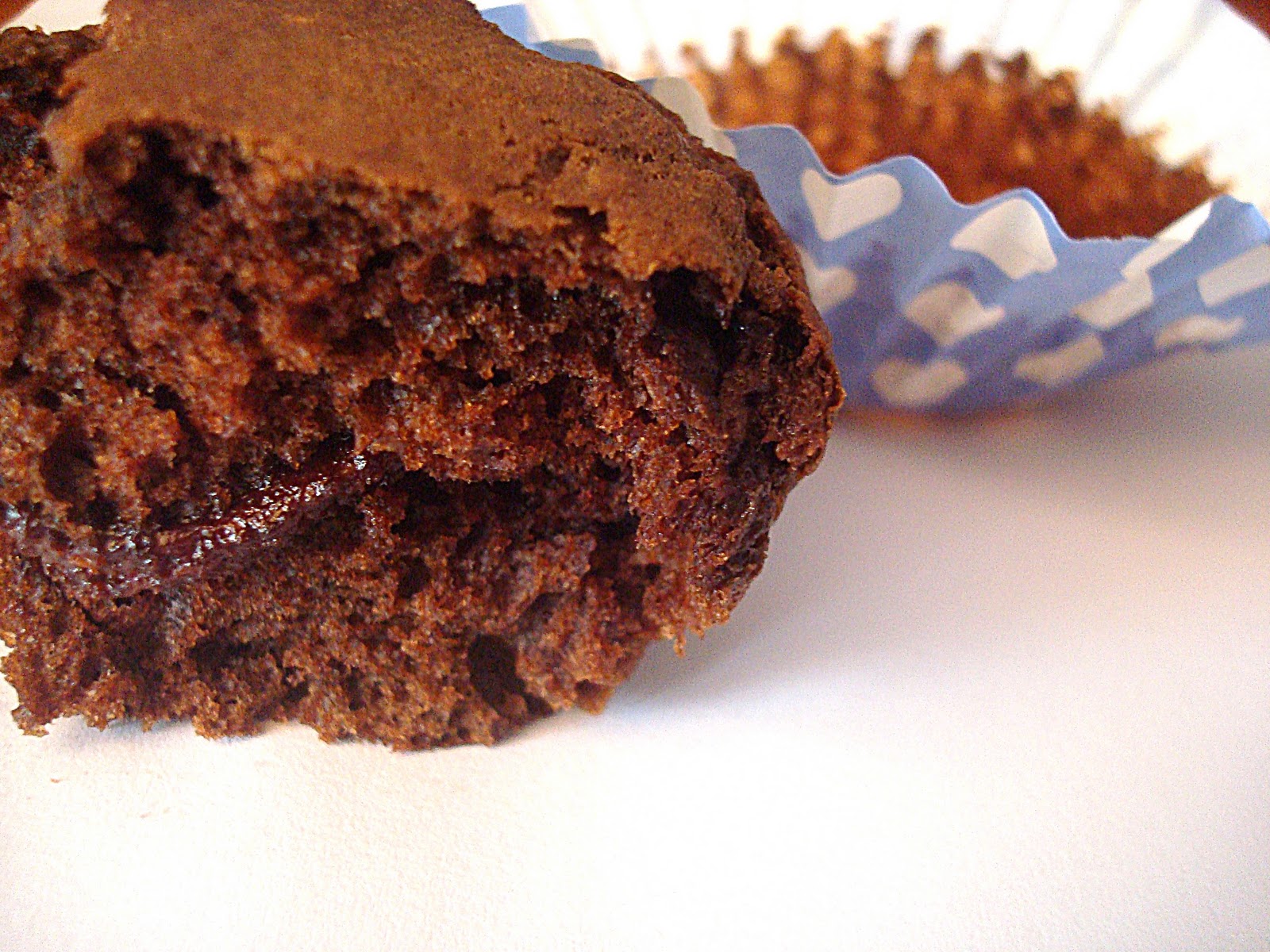
I’m not sure which ones I prefer. Even with 50% more sugar than the original recipe, the muffins are not sickly sweet so the white chocolate chips are a great addition. But I have a soft spot for the Nutella/banana combination and I loved the soft gooey Nutella blob at the middle of each muffin. Since the muffin mix is a bit thicker than the cupcake mix, the Nutella didn’t sink to the bottom like in the hazelnut cupcakes.

Take your pick, or make both.

Oxtail Ragu

About a month ago, I went to a butcher and found some oxtail. I had never had it before but had seen this recipe and was keeping my eye out for it. I made a ragu and used my pasta machine for the first time to make the pasta for it. It was pretty amazing but since I then went to Greece for a few weeks, I forgot to blog about it. Now I’m back and it’s cold so I started craving the rich, thick, meaty sauce on eggy pasta. No doubt I’ll be making it again soon.

The recipe is fairly similar to a standard ragu recipe with an extra step to remove the meat from the bone. I’ve changed the original recipe slightly to use spices I am obsessed about had in hand.

Oxtail Ragu (recipe adapted from Hollow Legs)

Ingredients (serves 4)

1.2 kg oxtail (bone included), cut into pieces
2 onions, chopped
4 cloves of garlic, finely minced
Half a bottle of red wine
1 tin of tomatoes
1 tsp Marmite
a sprinkle of dried oregano
2 bay leaves
1/2 tsp cinnamon
3-4 all spice berries
2 aubergines, chopped in finger-sized pieces
Salt and pepper

In a large saucepan, brown off the meat. Take it out of the pan, add some olive oil and the onions and fry until soft. Add the garlic and fry for a further couple of minutes, making sure it doesn’t burn. Add the meat back in the pan together with the wine and let it boil so that the the alcohol evaporates. Add the tomatoes, some water, the Marmite and the herbs and spices and simmer for at least 2 hours (but the longer the better).

When the meat feels soft, take the pieces out and remove it from the bone. Add the meat piecesback into the pan, together with the aubergine and a little more water. Let it simmer for an hour. Serve with pasta.

Orange and rhubarb cake

One of the most annoying questions in the world is the one that begins with “What’s your favourite…”. It’s also one that I love to ask, not so much to get a proper answer but just to see the person’s reaction to it. How do you pick your favourite film (although that’s easy for me, it’s the one that I watched 5 times in 4 months), your favourite band or your favourite food? More importantly, how on earth are you supposed to pick your favourite cake?!

No one should ever have to choose between a moist chocolate cake, a fragrant orangey one or a beautiful, summery, fruity cake. Notice, I said fruity cake. Not fruit cake. Fruit cake makes me feel cheated –  you take a bite hoping for sweet, soft carbohydrate to satisfy your crave and you end up with dry bits of overly sweet fruit sticking all over your teeth. And there’s loads of them, you can’t even pick them out! Fruit cake should be banned.

Fruity cake, though, is a whole different story. I’m talking about the usual sponge cake turned into a lemon or orange cake, with real bits of real fruit (berries, please) or even banana to turn it into a decadent moist loaf. The beauty of it is that you don’t even need a recipe. The rule is simple: equal amounts (weights) of butter, sugar, eggs and flour, a teaspoon of bicarb of soda and one of baking powder, a splash of vanilla extract and your base is ready. (If you want real measurements, 3 medium eggs, 150 grams of sugar, flour and butter will do).

Now go crazy! Add lemon or orange juice and zest, fresh or frozen berries, chocolate chips, or mashed bananas. Just remember that if you add more liquid stuff you will need to compensate for it with a bit more flour. And if you add the bananas, double the baking powder as it will be harder to rise. If you’re a fan of nuts, replace half of the flour with ground almonds or hazelnuts.

This is my standard, no-fail cake recipe. The variation I’m sharing with you below comes from the Masterchef cookbook and, although this is the first recipe I’ve made from it, it has loads of good looking things and I will be using it more soon. It also looks like there is an identical recipe on the Waitrose website so I don’t even feel guilty for putting it up here. Did Waitrose steal it off the book? Or did the Masterchef contestant cheat a little? Who cares? It’s delicious.

Orange and Rhubarb cake

Ingredients (enough for a 23cm diameter cake)

400g rhubarb, cut into 2cm pieces
50g caster sugar

150 gr caster sugar
150g butter, softened
2 large eggs
75g self-raising flour
100g ground almonds
1/2 tsp baking powder
1 tsp vanilla extract
zest and a juice of 1 orange

a handful of flaked almonds

Mix the rhubarb with the 50gr of sugar and leave on the side for 30 mins while preparing the cake mix.

Whisk the butter with the 150gr of sugar until light and fluffy, then add the eggs, the flour and the almonds and whisk until smooth. Stir in the orange juice, zest and vanilla extract and, finally, add the rhubarb and its juices and combine.

Butter and line a 23cm tin (or butter and flour a tray like I did), spoon the mix into it and scatter the flaked almonds over the top. Bake in a preheated oven at 190 degrees Celsius for 25 minutes, then reduce the temperature to 180 degrees and bake for another 20-25 minutes or until firm.

It’s lovely eaten by itself with a cup of tea in the afternoon. The cake is sweet and fragrant and the tart rhubarb balances it perfectly. As it’s not overly sweet, it’s also really nice served as a pudding with some cream, chantilly or custard.


Note: For the cake in the pictures above I have added some frozen berries as I had only a little bit of rhubarb – they worked nicely together.

Prawn Spaghetti

This blog is dying, isn’t it?

I wish I had a good enough excuse for the absence, or even an exciting one, like being on holiday. Truth is, I’ve been lazy. And I was working a bit too. But mainly lazy.

This is not one of those blogs where you get loads of personal stories. I prefer talking about food rather than myself – well, on the blog at least! But you’re about to get some chat about something that is close to my heart.

Wireless.

I love wireless internet. Sometimes I wonder what life was like before you could have the internet in your bedroom, in your toilet, in the kitchen, surfing before going to sleep and first thing in the morning. Sad, right? Well, everyone’s got their addictions.

Anyway, two weeks ago the wireless broke for reasons that are far too geeky for me to fully understand. I thought a bit of detox would be good but in the end what suffered the most was the blog.

You see, I’m sitting in the living room at the moment writing this. At the same time, I’m watching the football with a few friends and drinking a Belgian triple. This little insight into my evening might explain a lot about the quality of this blog but I quite like the multitasking, even if I’m quite bad at it!

Now that I’m reunited with my love, I thought I’d finally share a recipe with the world. It’s very simple and perfect for the summer. It’s best done using fresh raw prawns, with the shell on. What I do when I find them is to get rid of the shell on the body, leaving the head and the tail on; that way, peeling while eating is really easy and you also get all the lovely seafood flavours from the shells during cooking. Also, use fresh tomatoes if you have some big, red, juicy ones.

I’m sure there are many variations of this recipe, this is just the way I do it, having put together my favourite bits from recipes I used over the years.

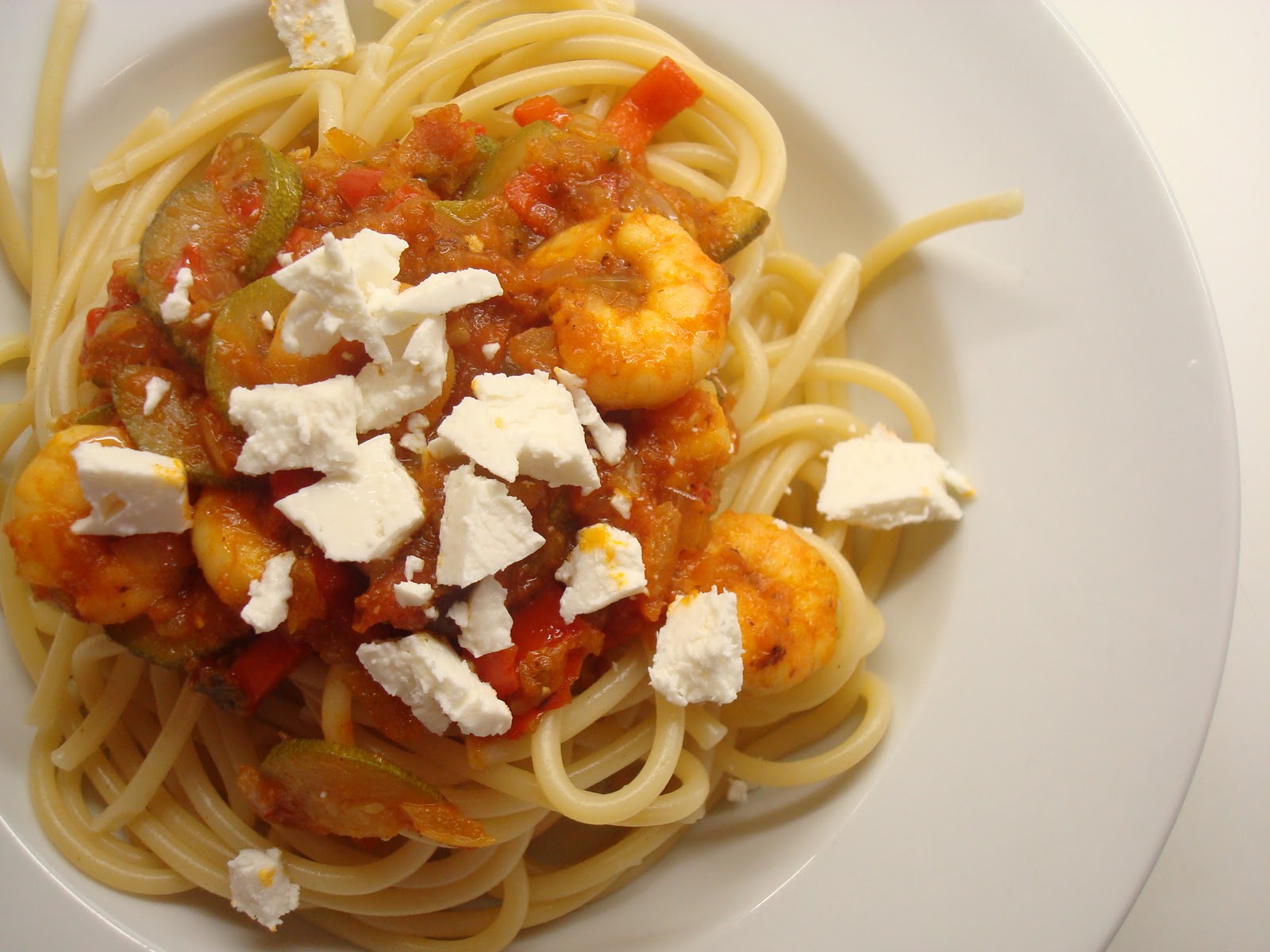
Prawn Spaghetti with Feta Cheese

Ingredients (serves 2)

200 gr fresh big prawns
a splash of balsamic vinegar

1 onion, chopped
1 chilli (without the seeds if you don’t like it too spicy), finely chopped
1 green or red pepper, chopped
1 courgette, thinly sliced (optional)
1 cup of fresh tomatoes, skinned and processed until smooth (or finely chopped tomatoes)
a pinch of oregano
salt, pepper, olive oil

250 gr dried spaghetti
crumbled feta to serve

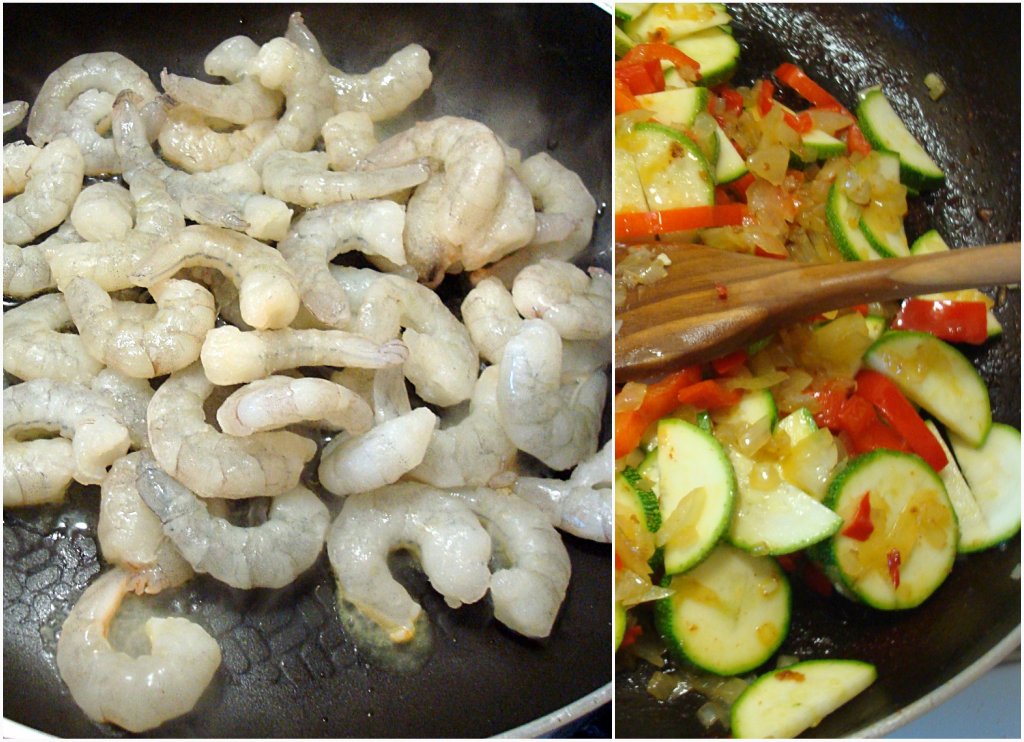
In a large frying pan, heat a splash of olive oil and fry the prawns until pink, turning half way. When cooked, add some balsamic vinegar and wait for a couple of minutes until it evaporates. Remove the prawns and set aside.

Using the same pan, fry the onions in a little olive oil until soft. Gradually add the chilli, the peppers and the courgettes and cook for 5-10 minutes. When the vegetables have softened, add the tomatoes and a bit of water, as well as the seasoning, and cook until the sauce has thickened and the courgettes are cooked through.

Boil some pasta and while that’s cooking, add the prawns back in the sauce for 5 minutes. Serve with some crumbled feta cheese on top.

Red Onion and Pomegranate Salad (Indian #6)

I have no idea if this is actually Indian but if it isn’t, it probably should be. It worked brilliantly as side to that Lamb and Spinach Curry together with some naan and rice and, according to Lizzie, it’s also great at barbecues. It’s not hard to imagine the sharpness and sweetness of this salad matching some smoky grilled lamb perfectly.

Red Onion and Pomegranate Salad (recipe from Hollow Legs)

Ingredients (serves 4-6 as a side)

2 red onions
juice of 2 limes
1 pomegranate
1/2 tsp cumin seeds
A handful of coriander
Salt & pepper

Slice the onions as thinly as possible and set aside. Cut the pomegranate in quarters and squeeze the juice into a bowl. Add the lime juice and the onions and let them marinate for 30 minutes. This will take away the onion harshness and save you from a unsociably stinky breath.

While onions are marinating, toast the cumin seeds and break them up in a pestle and mortar, or wrap them in a tea towel and bash them with a rolling pin. Pick the seeds out of the pomegranate, drain the onions and mix everything together. Add the chopped coriander leaves and season to taste.

Serve alongside a curry or in some pita bread together with some grilled meat.

Previously on Round the World in 100 Recipes:
King Prawn Puri 
Saffron Yoghurt with Fennel Seed Biscuits 
Aubergine in Yoghurt 
Heston’s Chicken Tikka Masala
Lamb and Spinach Curry
Next time on Round the World in 100 Recipes: I finally managed to make good naan bread! Now I just need to get some acceptable pictures of it…

Rhubarb Tarte Tatin

You can never have too much of a good thing, they say. Well, that’s complete rubbish. It took me about 2 years to start drinking Earl Grey tea again after months of several cups a day and I still haven’t been able to recover a taste for baked potatoes with cheese.

And rhubarb? Well, I’m not quite sick of rhubarb crumble yet, but I’ve definitely had my fair share of it over the last year. It was time to try something different. You see, stewed rhubarb is alright, but rhubarb roasted in butter and sugar is a lot better. And you could top it with crumble, but why do that when you can have a flaky, buttery puff pastry base instead?

I first saw this on Masterchef, when Marianne cooked it and the judges absolutely loved it. It looked brilliant, but all the recipes I found on the internet used a frying pan to caramelise the rhubarb and then cooked it in the oven. My frying pans don’t really survive in the oven, and I was worried that if I used the roast-for-3-hours technique the rhubarb would disintegrate into a pink mushy mess. As it turns out, rhubarb does survive hours of roasting. And tastes amazing after.

Rhubarb Tarte Tatin

Ingredients

4 large stalks of rhubarb, chopped
100 gr butter, softened
150 gr caster sugar
a sheet of puff pastry

In a round pyrex dish, about 20 cm in diameter, spread the butter as evenly as you can and sprinkle the sugar on the top. Arrange the chopped rhubarb in circles, making the bottom as pretty as you can, as it will be on the top later. If you have any extra bits, cut them smaller and sprinkle them over the top.

Cover with foil and bake in the oven for up to 2 hours at 180 degrees, checking towards the end to make sure the bottom doesn’t burn. Roll out a sheet of puff pastry and cut it in approximately the shape and size of your dish. Place it on top of the rhubarb, tucking the ends in, and bake until the pastry is cooked.

Let it cool for a few minutes, place a plate on the top and quickly turn it upside down.

My pieces of rhubarb made a bit of a mess, but I quickly rearranged them and made it almost presentable. I loved the fact that there was some soft, juicy rhubarb but also enough caramelised bits too. The extra syrup dripped on the pastry and made the edges shiny and sticky. I served it with a scoop of vanilla ice cream.

Lamb and Spinach Curry (Indian #5)

I am failing pretty miserably at making this blog even slightly seasonal. For the last few days the sun has been shining and I have been getting more and more silly tan marks and yet here I am writing about curry, again. Knowing British weather though, I am pretty convinced that soon enough it’s going to turn cold again and therefore perfectly suitable to warm, spicy, meaty stews. When it does, make this curry.

Lamb and Spinach Curry (slightly adapted from Hollow Legs)

Ingredients (serves 4)

4 onions
2 tbsp oil (I used olive oil but maybe something else would be more traditional)
5 medium tomatoes, peeled*
25 gr ginger
3-4 garlic cloves
1/2 tsp red chilli powder

800 gr lamb shoulder, cut in chunks, most fat removed

200 ml creamed tomatoes (approximately, depending on how red and beefy the fresh ones are)
2 tsp turmeric
2 tsp ground cumin
2 tsp ground coriander
1 tsp salt
2 green chillies, sliced in half (without seeds if you prefer)

1 bunch of spinach (~100 gr)
100 ml water
1/2 tsp garam masala
chopped fresh coriander, to garnish

Slice the onions and cook them in the oil slowly, for about 20 minutes, until soft. In the meantime, mix the fresh tomatoes with the garlic, ginger and chilli powder and blend until smooth. Add the soft onions and blend again. Return into the (large) saucepan and add the chunks of meat.

Cook for a few minutes until the meat starts to brown, stirring occasionally and then add the creamed tomatoes, the turmeric, ground cumin, ground coriander, salt and the sliced chillies. Add enough water to simmer and let it cook for at least 2 hours, although more will make it better.

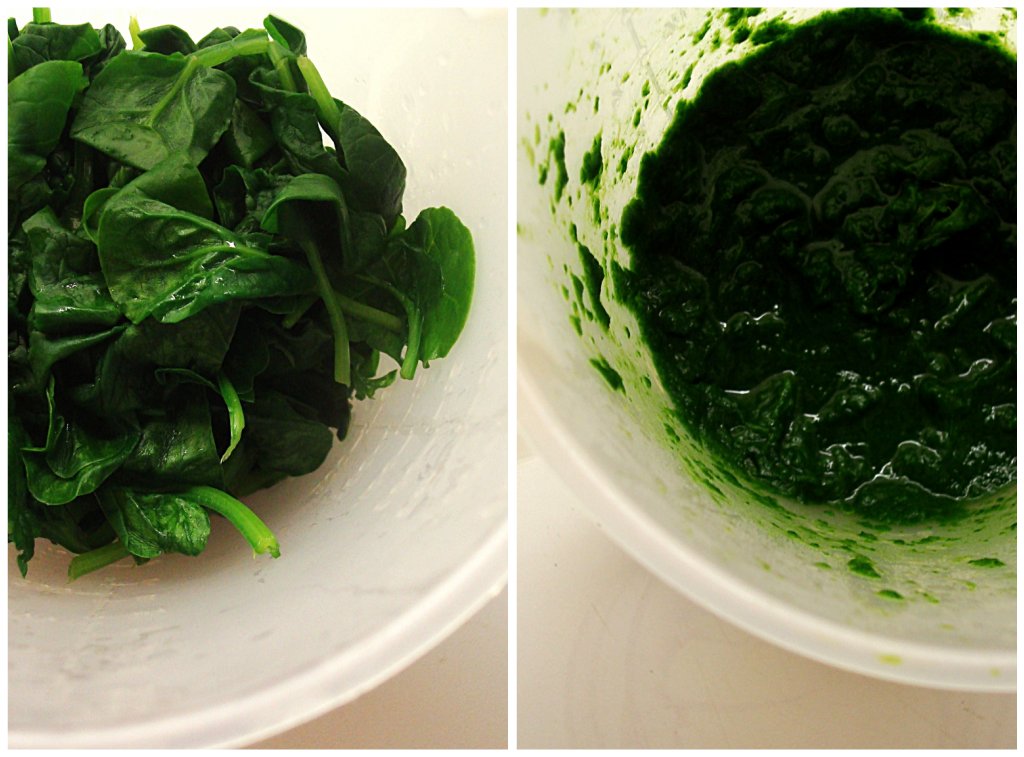
Towards the end of the cooking time, pour boiling water over the spinach until it’s just soft, drain and then blend it with the 100 ml water. Add the spinach puree and garam masala to the curry, let it simmer for a further 5-10 minutes and serve with some chopped fresh coriander.

* To easily peel the tomatoes, pour boiling water over them and leave them in it for a few minutes. Get rid of the water and peel.

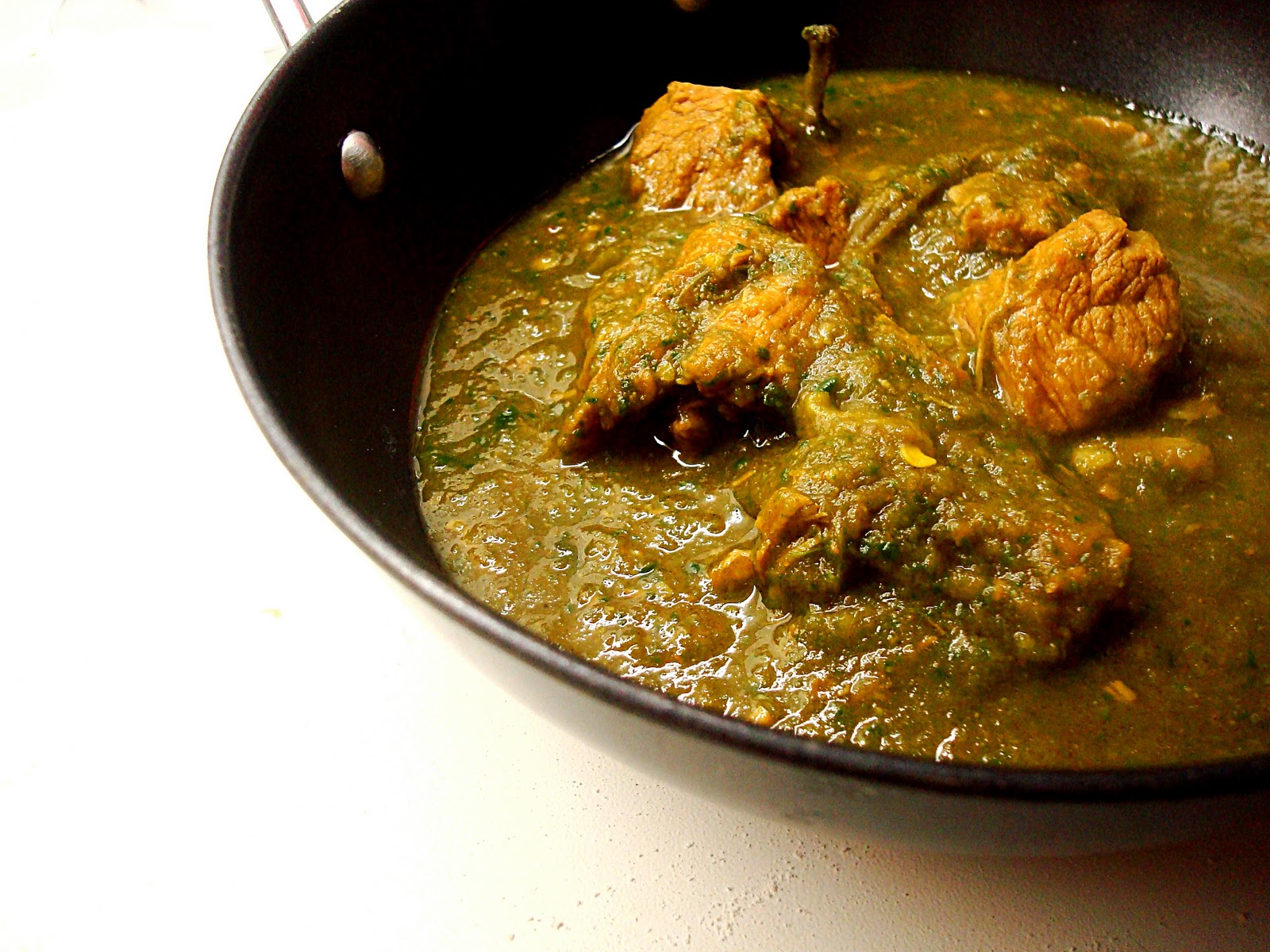
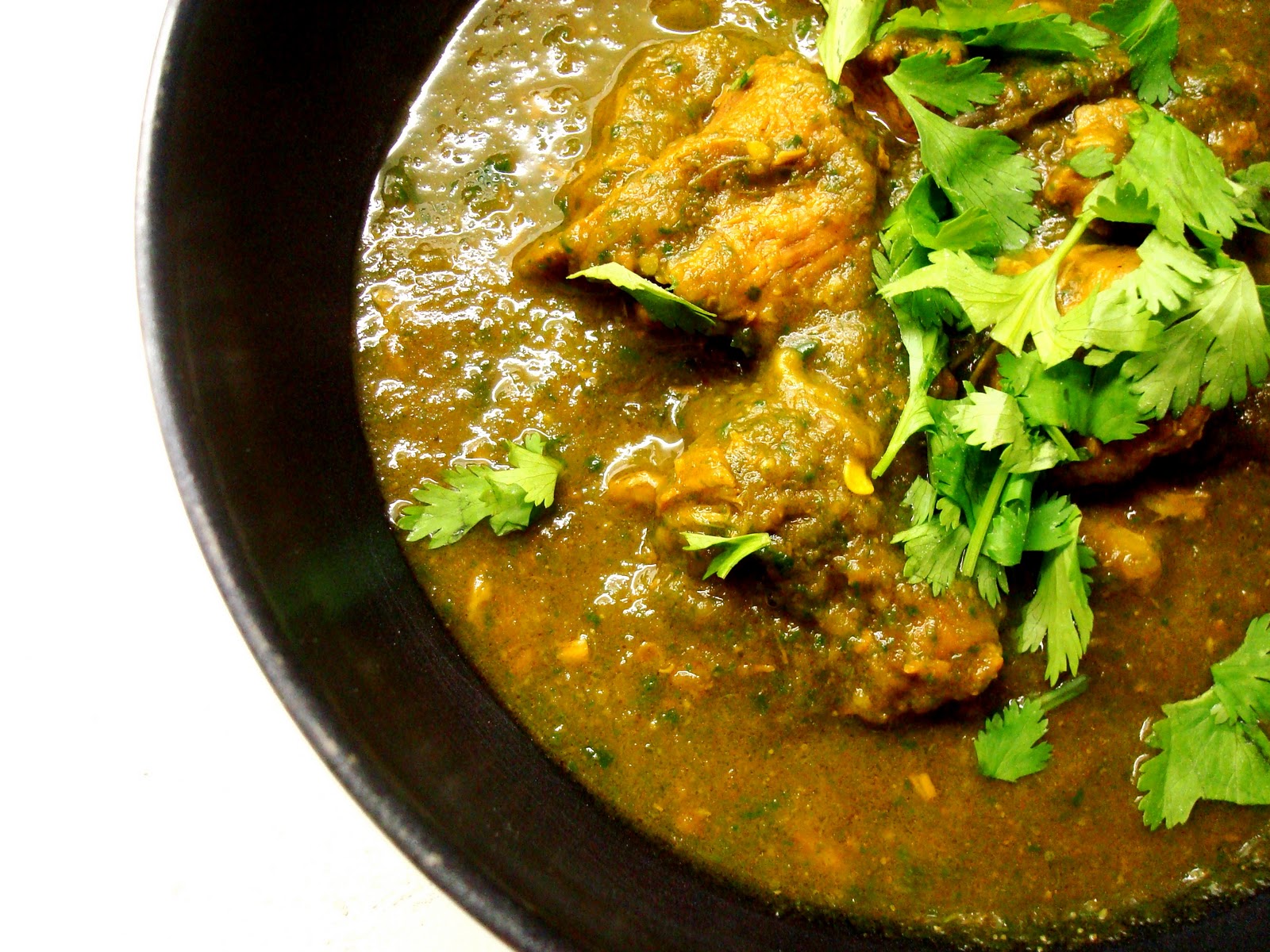
So, this looks green. Maybe a bit too green to excite you enough to give it a go. But it tastes absolutely brilliant, with soft, meaty pieces of lamb falling apart and a very thick sauce, perfect for scooping up with some naan bread (which, by the way, I finally succeeded in making- recipe coming soon!). I also served it with some cucumber raita and an onion and pomegranate salad that I got off Hollow Legs and it’s an adapted Nigella recipe.

Previously on Round the World in 100 Recipes:
King Prawn Puri 
Saffron Yoghurt with Fennel Seed Biscuits 
Aubergine in Yoghurt 
Heston’s Chicken Tikka Masala
Next time on Round the World in 100 Recipes: Probably that (very pretty) onion and pomegranate salad.

Heston’s Chicken Tikka Masala (almost) (Indian #4)

I don’t know how I decided to make this for my Indian “month”. In a way, I’m not quite sure that Chicken Tikka Masala qualifies as Indian, as there different stories about where it was first created; most of them agree it was in the UK. Recently though, chefs in India have starting endorsing it and making their own versions; its appeal to the rest of the world hasn’t gone unnoticed.

Having lived in the UK for 7 years now, it’s a bit strange that I had never had a Chicken Tikka Masala before I made this version. I think I have made up for it though, since this isn’t any version: it is Heston Blumenthal’s recipe from his In Search of Perfection series. In the book, which is quite a good read even if you never cook from it, he describes how he built his own Tandoori oven and came to Cambridge to use an MRI scanner on some chicken breasts.

As you can probably guess, I didn’t follow all of the instructions.

Chicken Tikka Masala (adapted* from Heston’s In Search of Perfection)

For the rub:

4 bulbs of garlic
50 gr olive oil
50 gr ginger
5 gr salt
8 chicken thighs/legs, bones and skins removed and meat sliced into bite-sized pieces

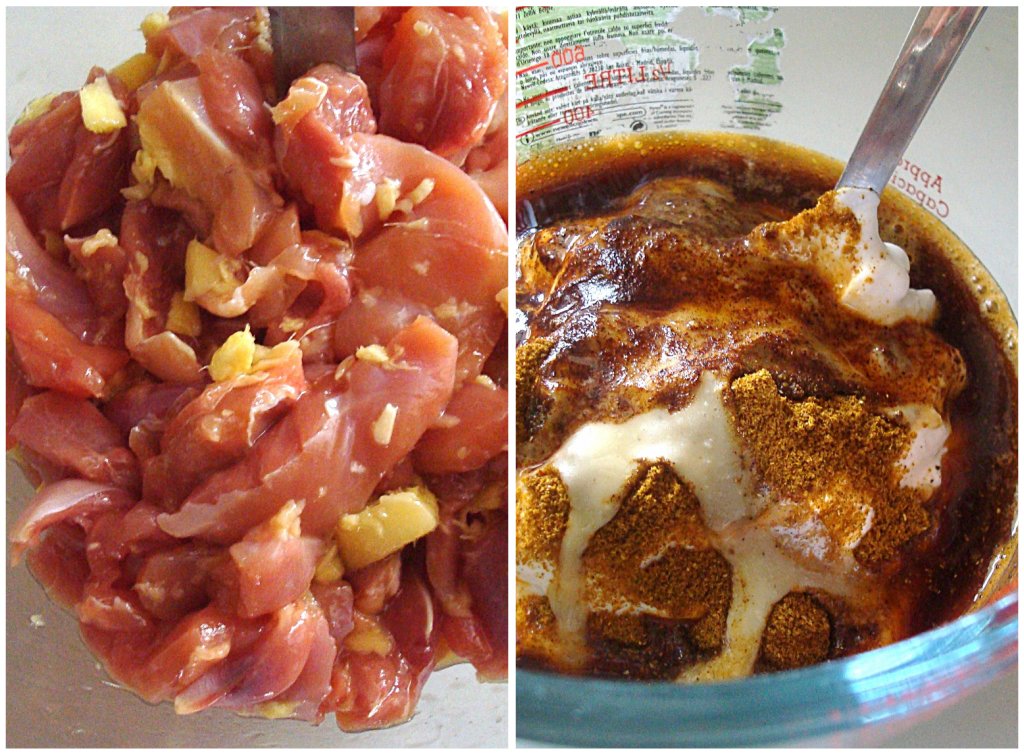
Pop the garlic and ginger in the food processor and add the olive oil and salt to make a paste. Rub the chicken with it and place in the fridge for 3-5 hours.

For the yoghurt marinade

20 gr ghee
20 gr chickpea flour (or normal flour, or a mix with cornflour)
40 gr olive oil
8 gr chilli powder
350 gr Greek-style yoghurt
10 gr garam masala

First, make a roux by melting the ghee in a pan, adding the flour and frying for a bit until the flour is cooked. Put in a plate and let cool.
Then, fry the olive oil with the chilli powder for 2-3 minutes. Move to a bowl and mix together with the roux, the yoghurt and the garam masala (basically everything together!).

Brush most of the rub off the chicken and cover it in the marinade. Leave in the fridge for a few hours, up to 10 if possible.

Remove any extra yoghurt, place on a grill or baking tray and grill under a medium heat until cooked through with a few charred spots on the outside. While the chicken is cooking, prepare the sauce:

For the Masala sauce

5 gr coriander seeds
5 gr cumin seeds
1 kg fresh tomatoes (or good quality canned)
40 gr tomato puree
100 gr water
50 gr ghee
1/2 tsp chilli powder
2 onions, sliced
25 gr ginger, chopped finely
salt to taste
1/2 tsp garam masala
1/2 tsp turmeric

Toast the coriander and cumin seeds, add the tomatoes and water and cook until reduced. Strain everything through a sieve.

In a frying pan, melt the ghee, add the chilli powder and fry for 2-3 minutes. Add the onions, ginger and salt and cook until soft. Add the tomato puree, the sieved tomatoes and the turmeric and garam masala and simmer until the sauce thickens.

To assemble

the cooked chicken
the masala sauce
50 gr yoghurt
50 gr coconut milk
diced chilli (optional)
fresh coriander (optional)

Add the chicken to the sauce and simmer for 5 minutes. Take off the heat and stir in the yoghurt and coconut milk. Sprinkle with the chopped chilli and some fresh coriander.

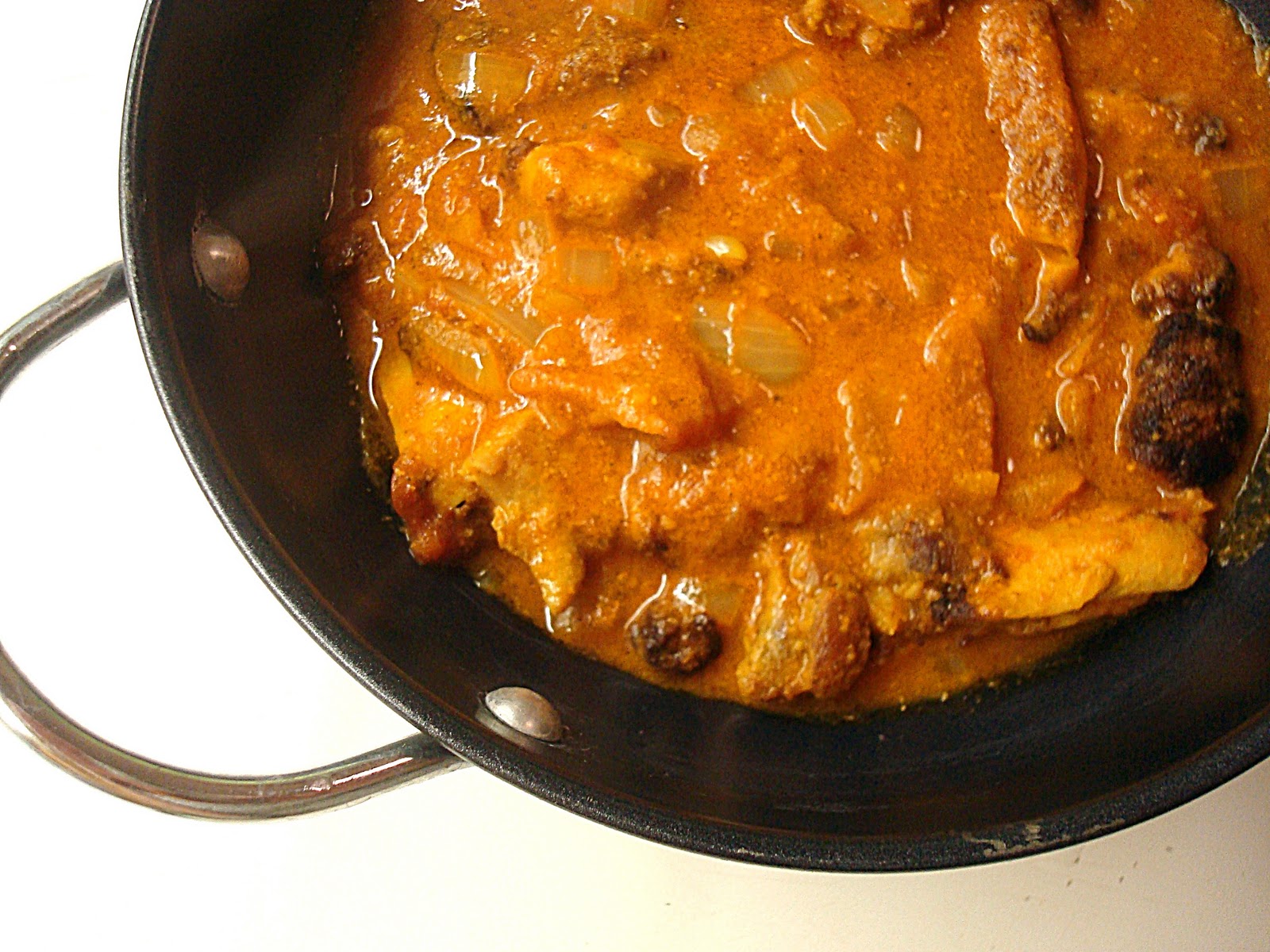
The meat was moist and soft, with caramelised spots all over. Before I added it to the sauce I was thinking that you could easily serve it dry, with some cucumber raitha and naan bread. As it is normal with stews, the sauce was even better when we had the leftovers the next day.

I served it with this Aubergine in Yoghurt side dish, some rice and homemade pita bread.

Previously on Round the World in 100 Recipes:
King Prawn Puri 
Saffron Yoghurt with Fennel Seed Biscuits 
Aubergine in Yoghurt
Next time on Round the World in 100 Recipes: More curry. Actually, the best curry I’ve ever had.

*I normally avoid publishing recipes taken from books, but a search online reveals that different versions of Heston’s CTM exist on other websites. This isn’t the original recipe (as it appears in the book) as I have simplified it to make it more home-cook friendly, so hopefully no one will get angry with me for putting it up here!  

Monaco Martini

Anyone who knows me knows that I have a tiny little obsession with Formula 1. Fast cars, cutting-edge technology, glamourous lifestyle and, erm, the drivers aren’t bad either. What’s not to like?

I had a half-chance to go to the Monaco Grand Prix this year, pretty cheaply too, but I couldn’t be away because I was graduating; although somehow I’m still a student. The only way to feel a bit of the Monaco glamour was to brave the post-graduation-party hangover on Sunday noon and make myself a Martini while watching the race.

I had this cocktail in Minneapolis, where Hendrick’s Gin seemed to be surprisingly popular, but I had already had a few g&ts by then and I can’t remember what it was called. I’m just going to call it My Monaco Martini and hope no one gets angry with me with some copyright issues. But if you do know the real name, or have a more exciting suggestion to make, please let me know in the comments.

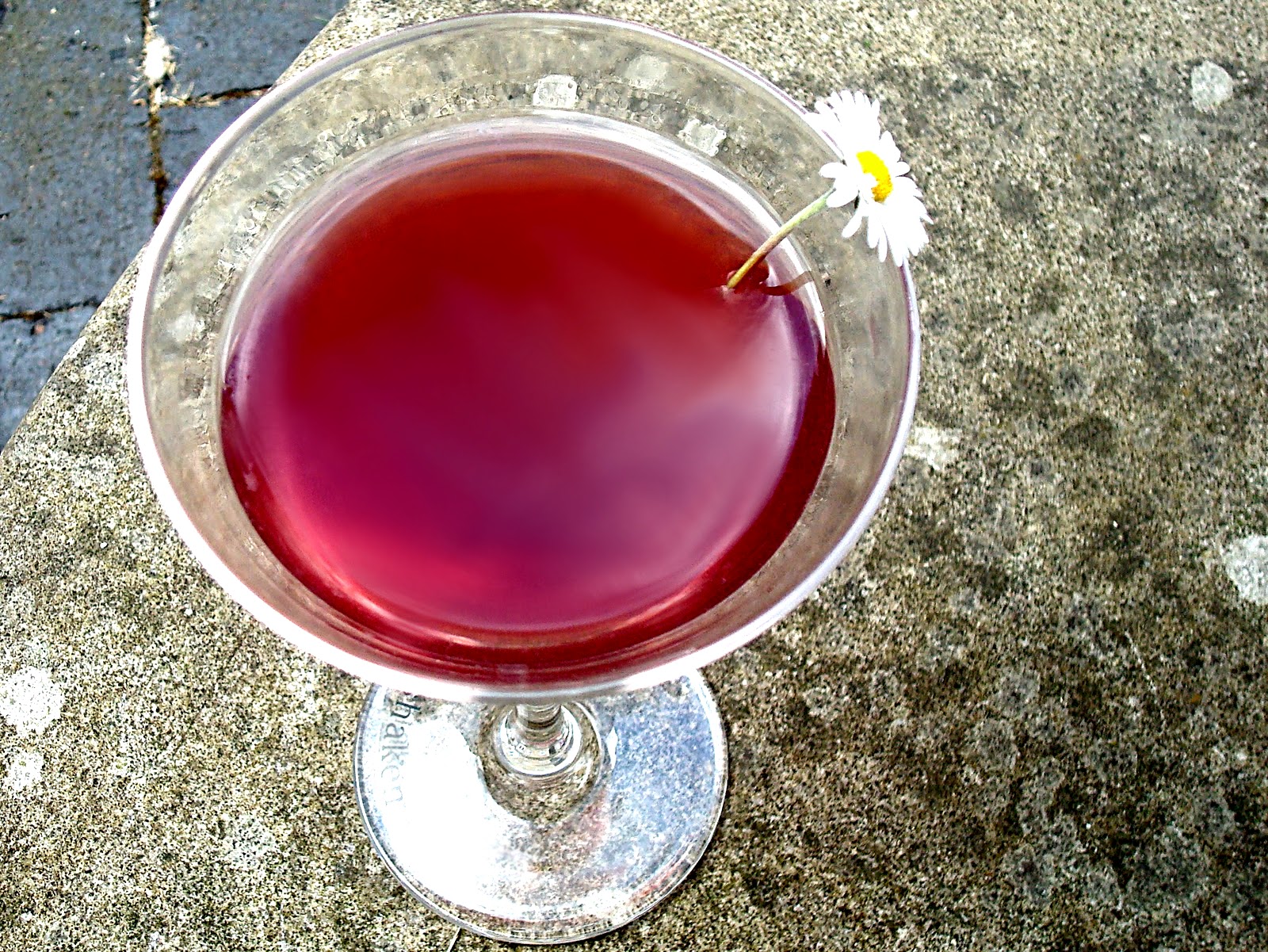
My Monaco Martini

Ingredients

45 ml Hendrick’s Gin
25 ml Chambord
a squeeze of half a lemon

Shaken, not stirred, with some ice. Strain into a martini glass. Enjoy (responsibly).

A couple of notes:

  • If you haven’t got Hendrick’s use another gin, but make sure it’s a high-quality smooth one, since there will be no tonic to mask any harshness. I had run out of Hendrick’s so used Tanqueray 10 instead, but I still think it’s better with Hendrick’s.
  • If you haven’t got Chambord, use some other raspberry liqueur, but keep in mind that the end result might be different as this is made from black raspberries and it has a slight bitter aftertaste after the initial sweetness.

It’s surprisingly easy to drink given the amount of alcohol in it. You’ve been warned.